Why Recruiters Need a Bulk Resume Scanner
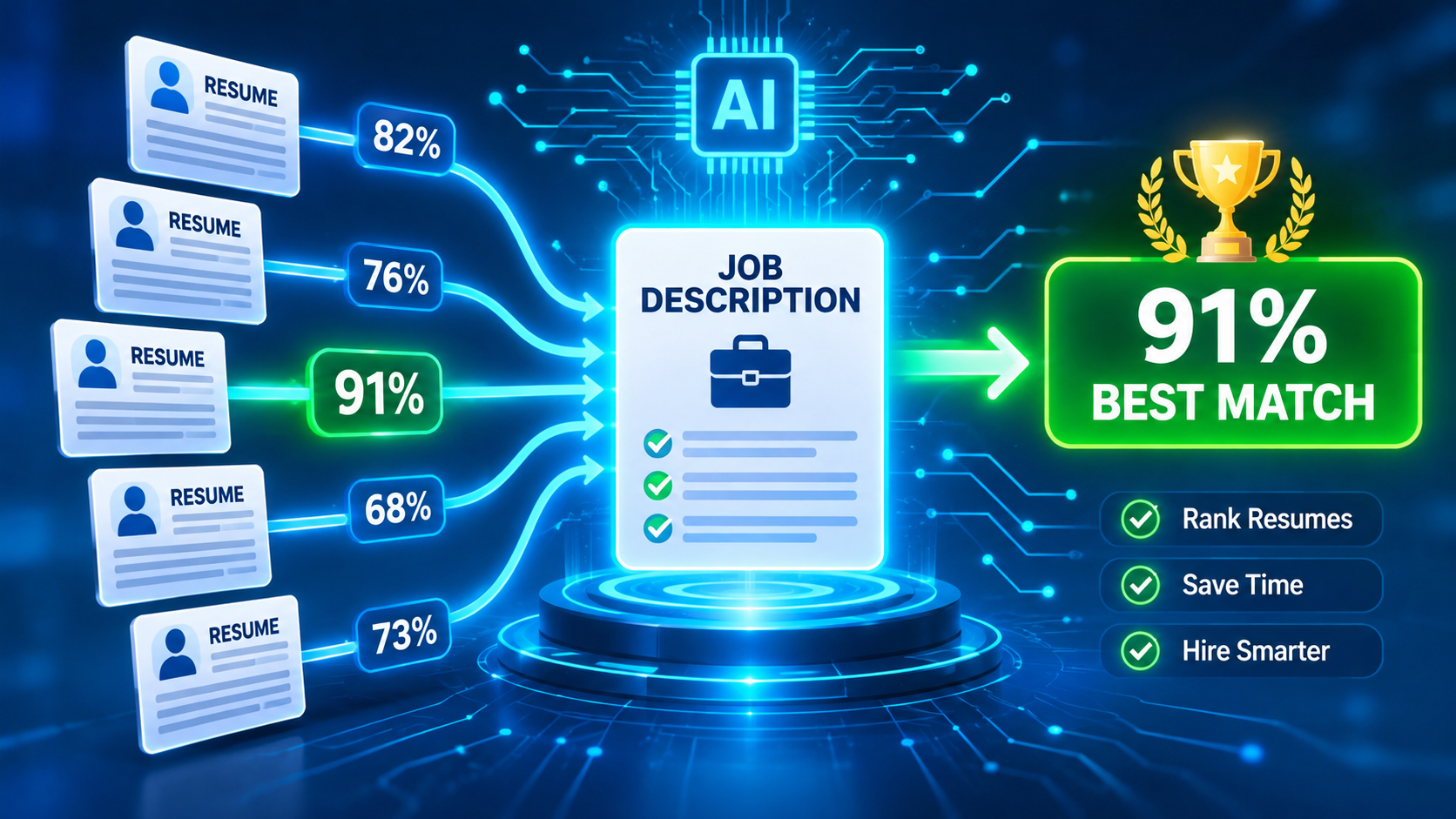
In high‑growth companies, a single opening can attract hundreds of applications within hours. Traditional ATS filters—often simple keyword checklists—can flag a portion of those resumes, but they leave hiring managers sifting through endless PDFs, trying to spot the truly qualified candidates. A bulk resume scanner solves this bottleneck by automatically scoring every submission against one job description, delivering a ranked shortlist in minutes.
Studies show that recruiters agree on a candidate’s fit less than half the time when reviewing the same resume twice (Cohen’s Kappa ~0.49). The inconsistency stems from human bias, fatigue, and the sheer volume of data. AI‑driven bulk scoring brings a repeatable, data‑backed layer to the decision process, reducing variance and freeing recruiters to focus on nuanced interview stages.
How AI Resume Scanners Score Resumes
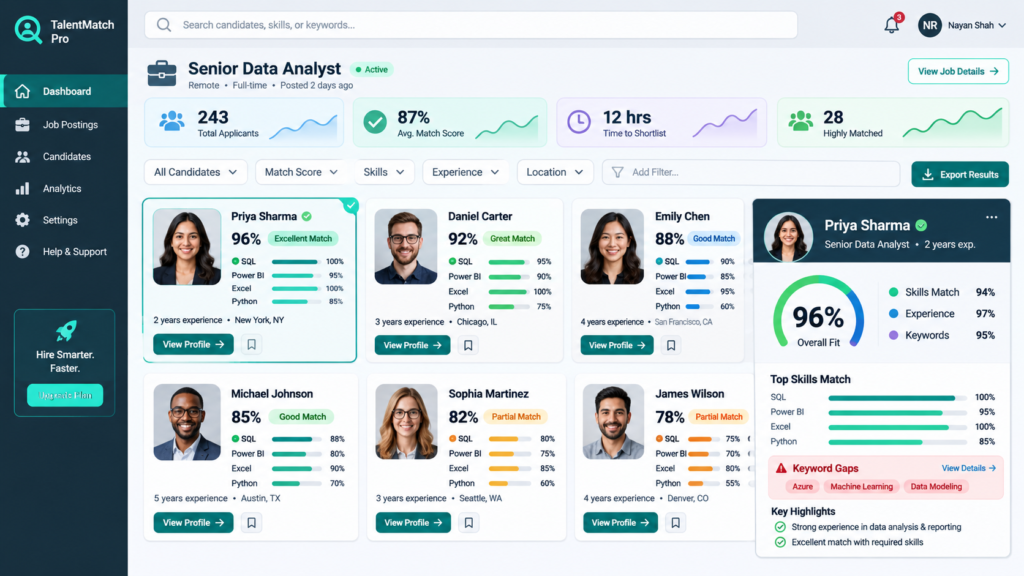
Most commercial bulk scanners—such as JustInterview.ai, MokaHR, and Metaview—break the evaluation into three core dimensions:
- Skills Match: The algorithm parses hard and soft skills from the job description and cross‑references them with the candidate’s listed abilities. Synonyms, related titles, and industry‑specific jargon are taken into account, so “Java” and “J2EE” both count toward a Java developer role.
- Experience Depth: Years of experience, seniority clues (e.g., “lead”, “manager”), and the relevance of past roles are weighted. A senior engineer with five years of relevant experience scores higher than a recent graduate with unrelated internships.
- Role Alignment: This looks beyond keywords to assess whether the candidate’s career trajectory matches the responsibilities outlined. AI models read sentences in plain language, giving credit for related achievements (e.g., “built a microservice architecture” aligns with “design scalable backend systems”).
Each dimension receives a sub‑score (0‑100). The platform then aggregates them—often with customizable weighting—to produce a final fit score. The result is a single numeric value that recruiters can sort, filter, or integrate into scorecards.
Critically, the score does NOT guarantee an interview. It is a probability indicator, similar to the match score you see in tools like Jobscan, but applied at scale to hundreds of resumes.
Beyond Keywords: The Hidden Drivers of a High ATS Score
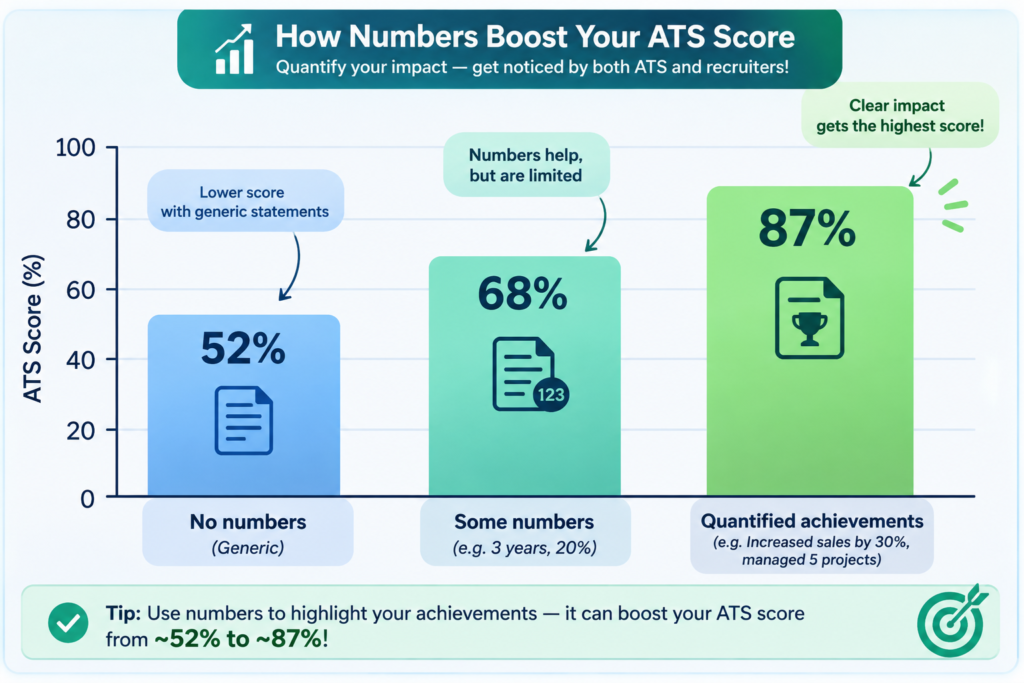
Keyword overlap is essential, yet research covering 336,637 resume checks reveals that over‑reliance on buzzwords can actually drag scores down. Vague descriptors such as “hardworking” or “team player” are associated with a 9.3‑point drop, while quantified achievements boost scores by an average of seven points. In fact, resumes with three or more quantified bullets averaged 71.8/100, compared with 64.8/100 for those without numbers.
For candidates, the takeaway is clear:
- Replace generic adjectives with concrete results (“increased conversion rate by 22%” instead of “improved conversion”).
- Limit overused buzzwords; sprinkle them sparingly and back them with data.
- Use the free keyword scanner to identify missing terms before bulk submission.
For recruiters, augment the AI score with a quick visual of quantified content. Many bulk tools provide a flag system—green for bullet points with numbers, red for missing metrics—allowing you to spot high‑potential candidates even if their raw score is marginally lower.
Choosing the Right Bulk Screening Tool
Not all AI resume scanners are built the same. Below is a quick comparison of leading platforms, focusing on features that matter when you need to score many resumes against one posting.
| Tool | Core Scoring Method | Batch Size | Explainability | Key Differentiator |
|---|---|---|---|---|
| MokaHR | AI‑native matching with explainable weight breakdown | Unlimited (cloud‑based) | Score rationale shown per skill | 3× faster screening, 87% consistency with human reviews |
| Greenhouse | Structured bulk filters + scorecards | 10,000+ per job | Boolean/keyword transparency | Integrated scheduling & interview kits |
| JustInterview.ai | Skills, experience depth, role alignment | 500 in 2 minutes | Red/green flags directly in CV view | Export to CSV or ATS in real‑time |
| Metaview | Ideal‑candidate profile matching with plain‑language reasoning | Unlimited | Fraud detection & auto‑re‑score on requirement changes | Learning loop from recruiter decisions |
When deciding, consider three questions: (1) Does the tool let you customize weighting for your unique role? (2) Can you export the ranked list directly into your ATS (MyResumeScan’s resume scanner offers seamless API integration)? (3) Does the UI surface explainable flags so you can audit the algorithm?
Implementing a Bulk Scanning Workflow
- Define the Ideal Candidate Profile: Start with a detailed job description, then extract core competencies, required years of experience, and preferred achievements. This becomes the “ground truth” for the AI.
- Upload Resumes in Bulk: Most platforms accept PDF, DOCX, or CSV (the latter for LinkedIn export). Ensure files are named consistently for traceability.
- Run the Scan and Review Scores: The system returns a ranked list with overall fit scores and sub‑scores. Use filters (e.g., “skills match > 80%” and “quantified bullets >= 2”) to narrow down.
- Audit Flagged Items: Look at red flags such as missing dates, generic language, or formatting errors. These often indicate low ATS readiness and can be corrected before moving forward.
- Combine with Human Review: Select the top 10‑15 candidates for a quick recruiter screen or a structured interview. Remember the study showing AI achieves a Cohen’s Kappa of 0.45 with humans—close, but not a replacement for human judgment.
- Iterate: As you hire, feed back outcomes into the tool. Many platforms (Metaview, MokaHR) learn from recruiter selections to fine‑tune future scores.
For a hands‑on example, see our Bulk Resume Scanner page, where you can try a free trial with your own job description.
Best Practices for Candidates Facing Bulk Screening
- Tailor, but don’t over‑optimize: Align your resume to the posting, but keep the narrative authentic. Excessive keyword stuffing can trigger recruiter skepticism; a 40% rise in rejections was linked to inflated keyword density.
- Quantify Everywhere: Aim for numbers in at least 30% of bullet points. Use percentages, dollar values, or time frames.
- Use ATS‑Friendly Formatting: Simple headings (“Experience”, “Skills”), standard fonts, and no tables or graphics. Our AI resume builder offers templates that pass most scanners.
- Run a Pre‑Check: Before sending a bulk application, run your resume through the free ATS checker to see the raw score and missing terms.
FAQs About Bulk Resume Scanning
Is a high AI score enough to guarantee an interview?
No. The score reflects keyword and experience alignment, not cultural fit or soft‑skill assessment. Use it as a triage tool, then apply human judgment.
Can I customize the weighting of skills vs. experience?
Most enterprise‑grade tools allow you to set weight percentages. For senior roles, you might weight experience depth at 60% and skills match at 40%.
How secure is my data?
Many scanners, including MyResumeScan’s AI scanner, run client‑side parsing, meaning the resume never leaves your browser unless you explicitly upload it to a cloud service.
What if I have to change the job description after the scan?
Tools like Metaview automatically re‑score all candidates when you edit the ideal‑candidate profile, saving you from a manual re‑upload.
Conclusion: Scoring Multiple Resumes Becomes a Competitive Advantage
Bulk resume scanners turn the chaotic influx of applications into a data‑driven shortlist, delivering three core benefits: speed (up to 3× faster than manual review), consistency (objective match scores across hundreds of candidates), and insight (transparent flags that highlight resume weaknesses). When combined with best‑practice resume writing—quantified achievements, concise language, and ATS‑friendly formatting—both recruiters and job seekers gain a clearer, fairer view of fit.
Start experimenting today: upload your job description into the Bulk Resume Scanner and see how AI can rank dozens of resumes in seconds. The future of hiring isn’t just about who applies; it’s about who the technology tells you is worth meeting.
Leave a Reply